
NAVIGATING THE FUNNEL AND LEAVING BETTER FOR IT
Most athletes who enter emerging athlete pathways — be that college or club systems — exit high-performance sport in their early twenties. To make it this far is huge, exiting is NOT failure — it is just what the funnel does. Recruitment narrows to entry, entry narrows to age-groups and eligibility years, and only a handful move beyond that into professional sport.
So what do they leave with? The truth is, a hell of a lot more than they realise. Leaving better than they came in requires a duty of care from the institutions and clubs they move through, but it requires athletes own their business too! If done right, they leave knowing who they are, what they want, and how that translates into the next transition in their life.
Below is a framework which pulls the what, the how, and the who together.
These are adolescents navigating the pathway, most not consciously aware of who they are, what they want or why. This means self-awareness isn't something they arrive with, it's something they have to be nudged into recognising. The what names what's actually happening to them: the life pursuit they know but can’t name, the transitions, the grief that comes with any ending, but the reality that with every ending is myriad of new beginings they get to choose from.
The how names the trifecta that any pathway relies the confidence ebb and flows that come with practice, faith, resilience — and none of it arrives fully formed. It's built through preparation, through reps, through getting knocked down and getting back up, over time. The who is underneath both: who they are, true to self and others, what's actually their call, and who they're connected to along the way.
Guided right, this is what turns a sixteen-year-old who's only ever been told what to do into someone who knows what they're chasing and why — not because someone handed it to them, but because the people around them built the conditions for it to grow.
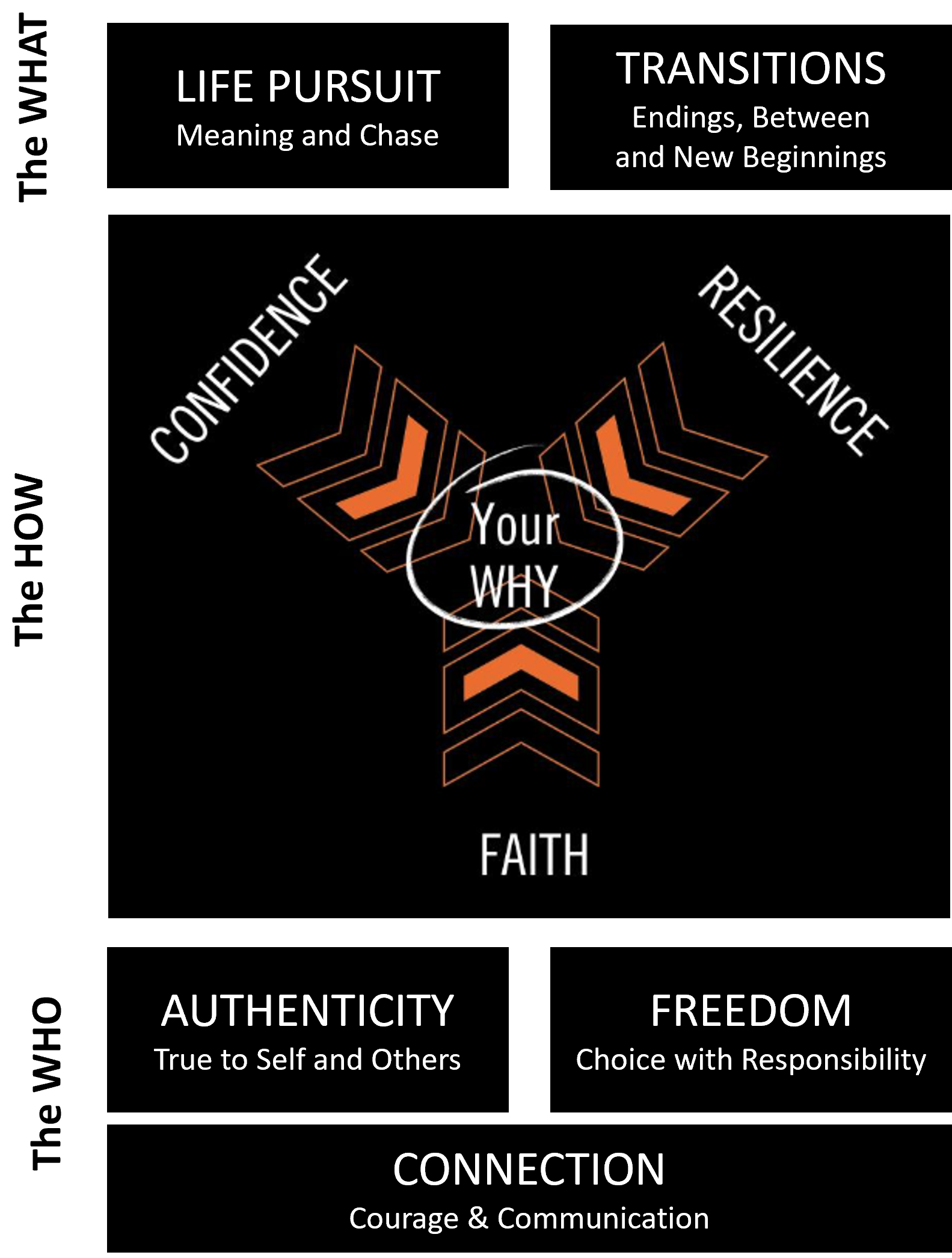
The Framework