
NAVIGATING THE FUNNEL AND LEAVING BETTER FOR IT
Most athletes who enter emerging athlete pathways — be that college or club systems — exit high-performance sport in their early twenties. To make it this far is huge, exiting is NOT failure — it is just what the funnel does. Recruitment narrows to entry, entry narrows to age-groups and eligibility years, and only a handful move beyond that into professional sport.
So what do they leave with? The truth is, a hell of a lot more than they realise. Leaving better than they came in requires a duty of care from the institutions and clubs they move through, but it requires athletes own their business too! If done right, they leave knowing who they are, what they want, and how that translates into the next transition in their life.
My Framework
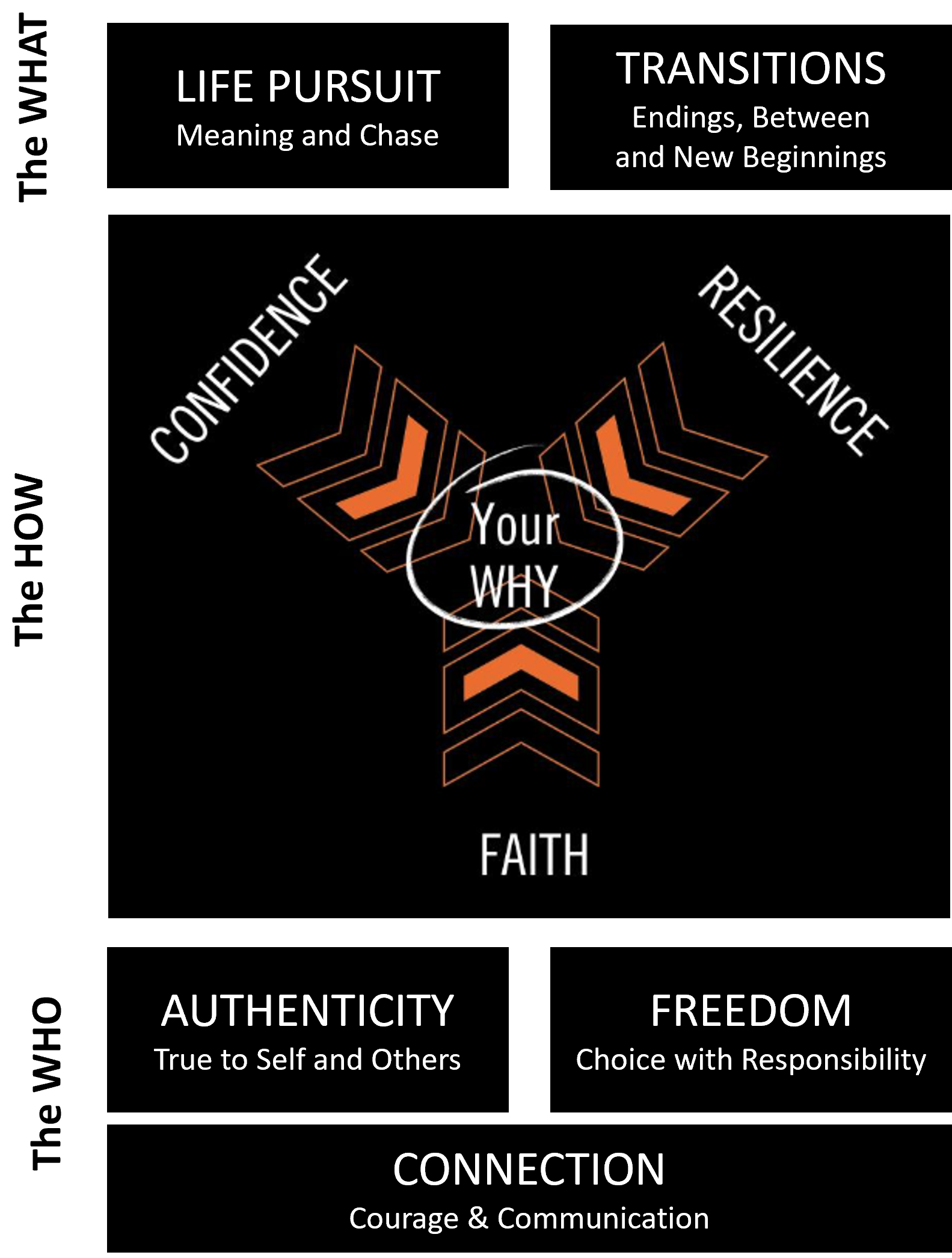
Below is my framework which pulls the what, the how, the who and the why together.
Most adolescents navigating talent pathways are not consciously aware of who they are, what they want or why. This means self-awareness is something they have to be nudged into working on.
There are four parts to it:
THE WHAT? What are they chasing, and where are they at in their sporting and life transitions?
THE WHY? This sits at the centre of the whole model, driving the what, the who and the how. It sits typically as four deeper questions, because I want to: be, do, have, or feel.
THE HOW? Confidence comes with experience. It's transactional, not a muscle — it has an ebb and flow, and it forms when competencies are established. Resilience comes with experience too: the successes, the failures, the exposure to different things that build a knowing you have the resources to adapt and cope. Faith runs deeper, tightly linked to the why and the who — a trust, in line with your own spiritual practice, that reach what you are chasing. These are the self-efficacy trifecta.
THE WHO? Underneath it all, this isn't about a single role or label, but who they truly are behind the masks, beyond the transition, their authenticity. Who they are, and what they do, with the freedom to make their own choices — and the responsibility that comes with those decisions. We're wired for connection, so their authenticity and freedom are underpinned by their relationships, that is their courage to hold true to themselves and in their relationships and communication with others.
Built with truth and transparency, this framework gives young people navigating an emerging athlete pathway a strong foundation to carry into whatever comes next.
REAL TALK | GENUINE CARE
What they leave with FRAMEWORK